
Sun Mountain Apiary
  • Home
  • Our Store - Products
    • News and Events
  • About Our Honey
    • About Our Bees
    • About Us
  • Contact
  • Home
  • Our Store - Products
    • News and Events
  • About Our Honey
    • About Our Bees
    • About Us
  • Contact
Picture
Welcome to Sun Mountain Apiary 2026
Picture
Picture
After the long cold winter we have had, everything kicks into high gear in April.  It's time to get “buzzing” for both the bees and me!  The first warm days, which generally mean at least 50+ degrees, allows the bees to start their spring chores.  This includes taking additional cleansing flights (they really try to avoid pooping in the hive), carrying out debris and any bees that died over the winter, and of course collecting pollen. 
You may have noticed honey bees at your birdfeeder, on sawdust or even on your animal feed.  With the longer, warmer days, it has been the signal for the queen to start laying again.  The brood requires nutrition most notably in the form of protein rich pollen.  If no pollen is available, any reasonable substitute will work as something is better than nothing and hence they go after any powdery type of protein.  Fortunately, in April natural pollens start to appear.  Pussy Willows, Red Maple, and Skunk Cabbage make the first appearances providing much needed natural pollen with many others appearing as the month progresses.  Dandelions and Sugar Maples will soon be popping out providing both pollen AND nectar to kick the hive into high gear. Bees don’t particularly like dandelions, but since they are the first to bloom and plentiful, the bees go after them with relish regardless.  When you are hungry any food tastes good! While many suburban homes use copious amounts of herbicide to kill the dandelions, the lowly dandelion is a critical lifeline to many of the emerging spring pollinators in addition to honey bees so we hate to see that happen.

Picture
Photo by R. Muller
In this picture (taken this past week) you can see lots of yellow pollen (likely from pussy willows) in the honey bee’s pollen baskets.
Things get busy for the beekeeper as well and it seems like everything needs to be done at the same time!
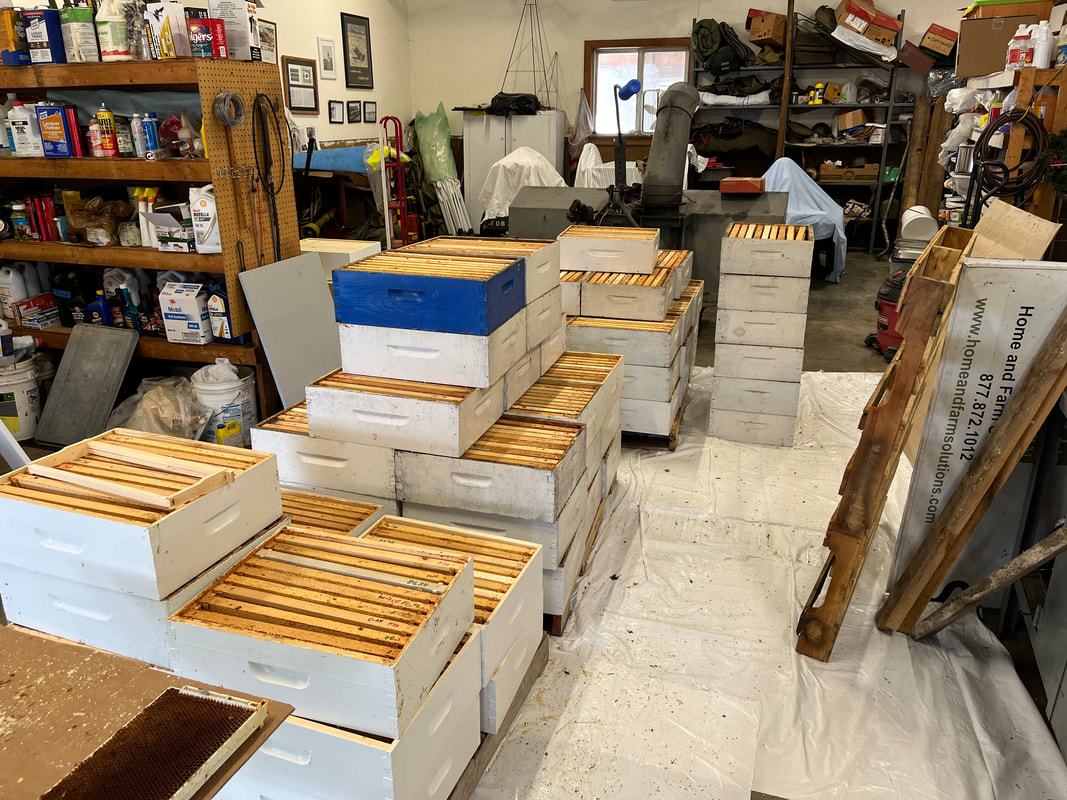
Woodenware just came in from the Amish so it all needs to be assembled and some of it painted.
Picture
Woodenware awaiting assembly
The assembly is more accurate and faster with jigs and air nailers. 
Picture
The jig above lets me assemble about 19 frames at a time.
Picture
One of many stacks of frames assembled so far. Some still need strips of beeswax for the natural comb or some will get full foundation for strength.
Picture
This jig keeps the supers (boxes) square while they are assembled. These are all great projects while the weather is a bit sour, but in the remaining couple of weeks it is imperative I go through all the hives to check on their health, strength, do remaining cleaning, and any manipulations that are warranted. The first honey supers are put on about May 1 and sometimes even a bit earlier depending on the weather. Those honey supers also need to get cleaned and prepped before that happens.
Picture
Here are SOME of the supers that need to be cleaned and prepped. Because I use a lot of natural foundation (the wax base they work from), it is much more fragile and delicate than commercial foundation when cold. Experience has taught me not to rush to clean these when it is cold or I end up breaking a lot of their hard-earned wax, making them work a lot harder to rebuild it. To make the comb honey we sell, I also insert two new frames in most boxes with just a small strip of wax at the top as a “start here” guide to the bees. Those frames are marked and I know all the wax will be fresh, local, and natural, just like the honey. Well, time to get “buzzing!”
Bee Well,
Bob
Just 10 weeks away - the Honey Store will tentatively open July 1, 2026!
---------------------------------
Bob Muller
Cornell Certified Master Beekeeper
Picture
Deer such as these three are nearly a daily occurance
Picture
Some days they are just full of it as a couple are just yearlings
Picture
We have a pair of foxes that make a regular appearance. Nice to see they are healthy with good coats.
Picture
Usually when there are coyotes, the fox are scarce in the area and vice versa. This year has been unusual as we have been seeing both with regularity
Picture
I would prefer this guy to find a different neighborhood come spring. Skunks really like eating bees and can kill a hive.
Picture
There is a reason we no longer have chickens, and you are seeing “Exhibit A” of the multiple homicides we experienced a year or so back. There is a pond directly in front of the bee yard and mink find it a perfect place to spend a day or two. They are incredibly fast in water too and I have often heard of them cleaning out folks' expensive, stocked trout in a pond in just a couple weeks in the months.
Picture
Picture
Several folks wanted to know who the others were…. Captain J.E. Hetherington was from Cherry Valley, NY. He started beekeeping at a very young age, but joined the Union Army as a sharpshooter. He was severely wounded twice and mustered out as Captain. After a couple year recovery from his wounds, he resumed beekeeping. At his peak he oversaw between 2,500 and 3,000 colonies. Interestingly, most of his honey was exported to England which was unheard of up until that time. He was also friends with and a neighbor of Moses Quimby (inventor of the bee smoker and a multitude of bee equipment still used today). Hetherington was also an inventor and developed the concept of wired foundation and using comb beeswax foundation both of which are commonly used today.
Picture
Moving further west, we have William Coggshell of Groton in Tompkins County. He also ran about 3,000 colonies and pioneered the use of “out yards” where bees were placed where the crops were rather than in one large apiary near his home. This not only helped the crops, but the bees had plentiful nectar just outside the yard so had minimal flying to do to get it. The most common crop he had "out yards" in? Buckwheat. All three of these men were hardworking, smart and talented beekeepers, but there were other beekeepers around the country that also shared these talents. What do you think was the one thing that they also had in common that allowed these three here in NY to be the world’s largest?? Shoot us an email with your ideas! We will answer in the next email.
Picture
Picture
Picture

“This has become my go-to gift store for a unique gift that everyone seems to love.  It is convenient and I LOVE the honey!”   Jan H, Delanson, NY 

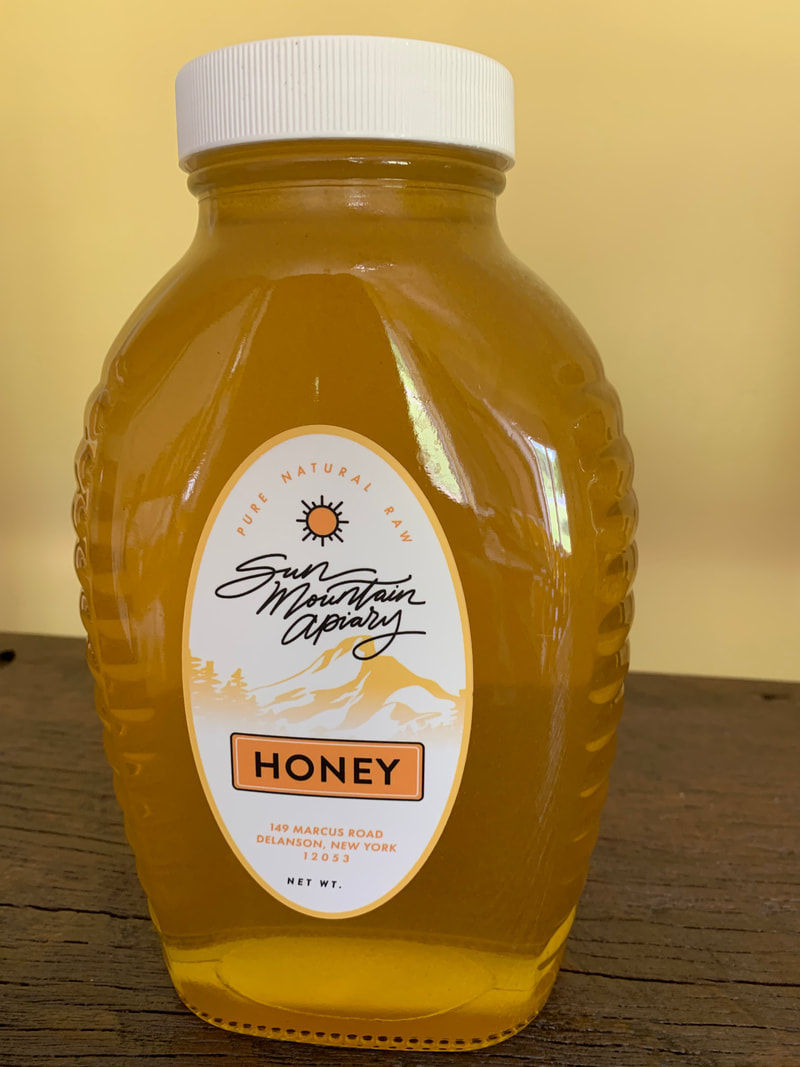
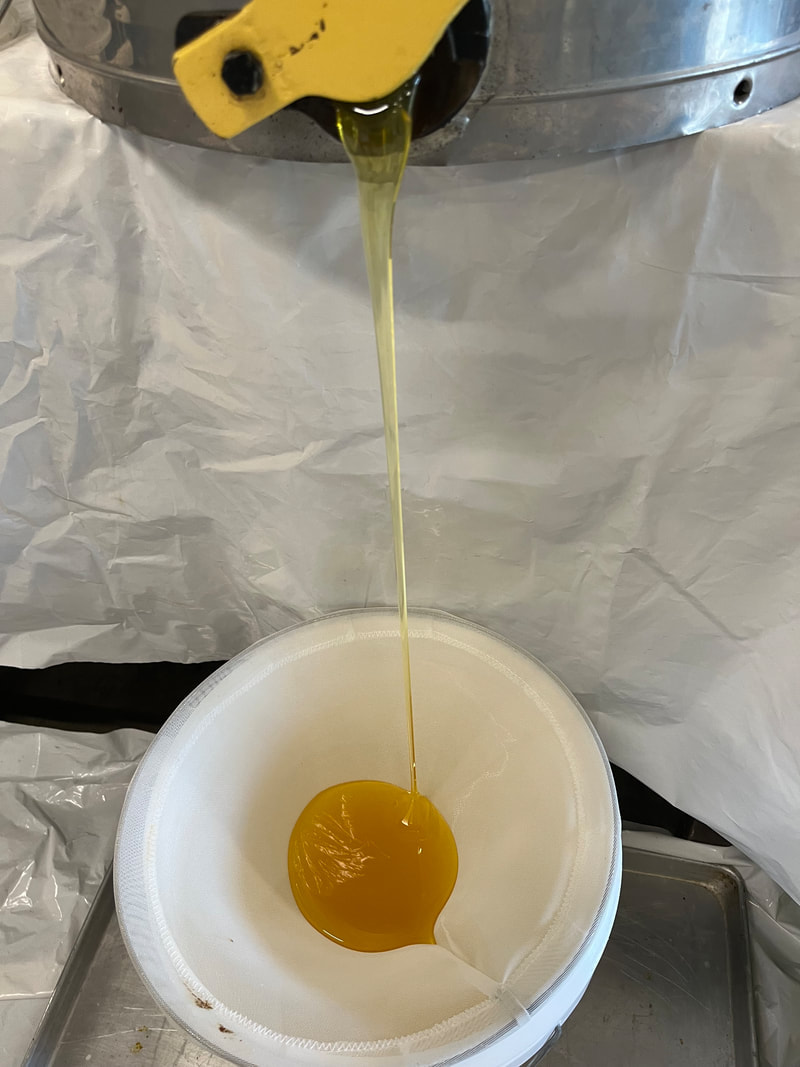
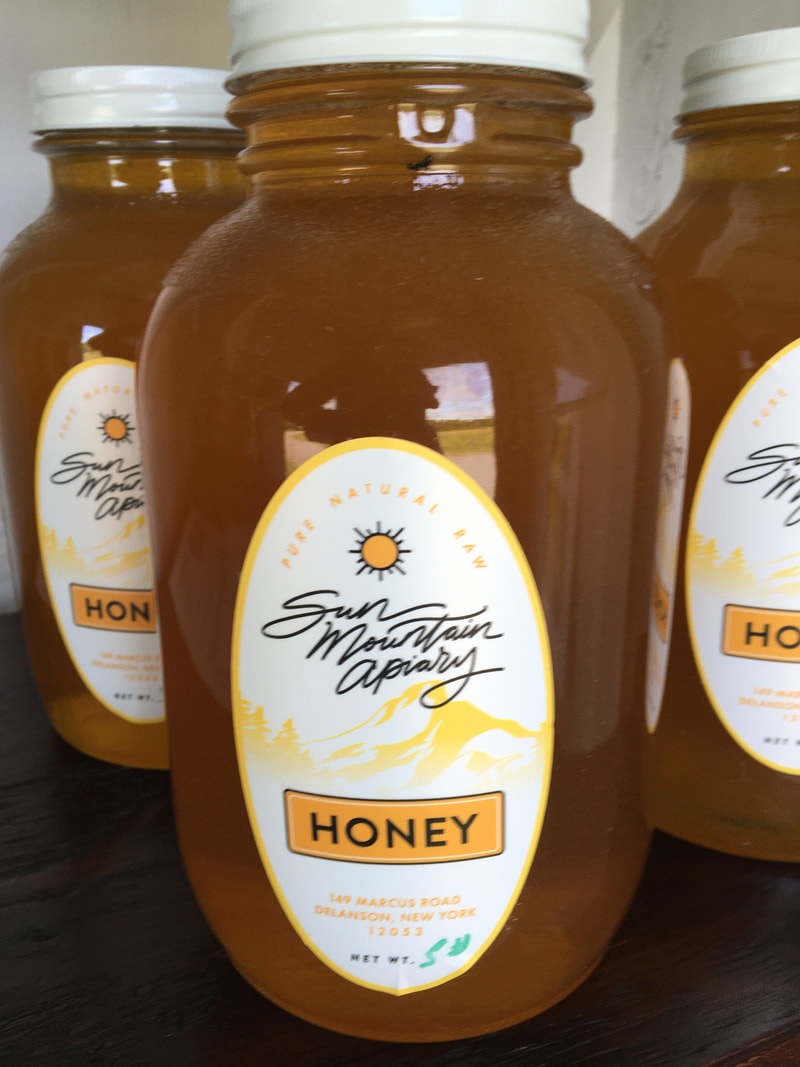
In 2020 we went through the testing and inspection process to become a “NY Grown and Certified Honey Producer.” While all claim their honey is pure, and bees are the best, we decided to back the claims up with the documentation and inspections that prove we have healthy hives, excellent sanitation in extraction, and nothing but pure, raw NY local honey. 

Pure - Natural- Raw
Picture

Sun Mountain Apiary
127 Marcus Road
Delanson, NY  12053


Bob Muller
Cornell Certified Master Beekeeper
[email protected]
All Rights Reserved 2026

Website design:  UpstateNYIT.com
Powered by Create your own unique website with customizable templates.